

Vir Vivek Student Coordinator
October 30, 2025Berlin Campus
January 25, 2026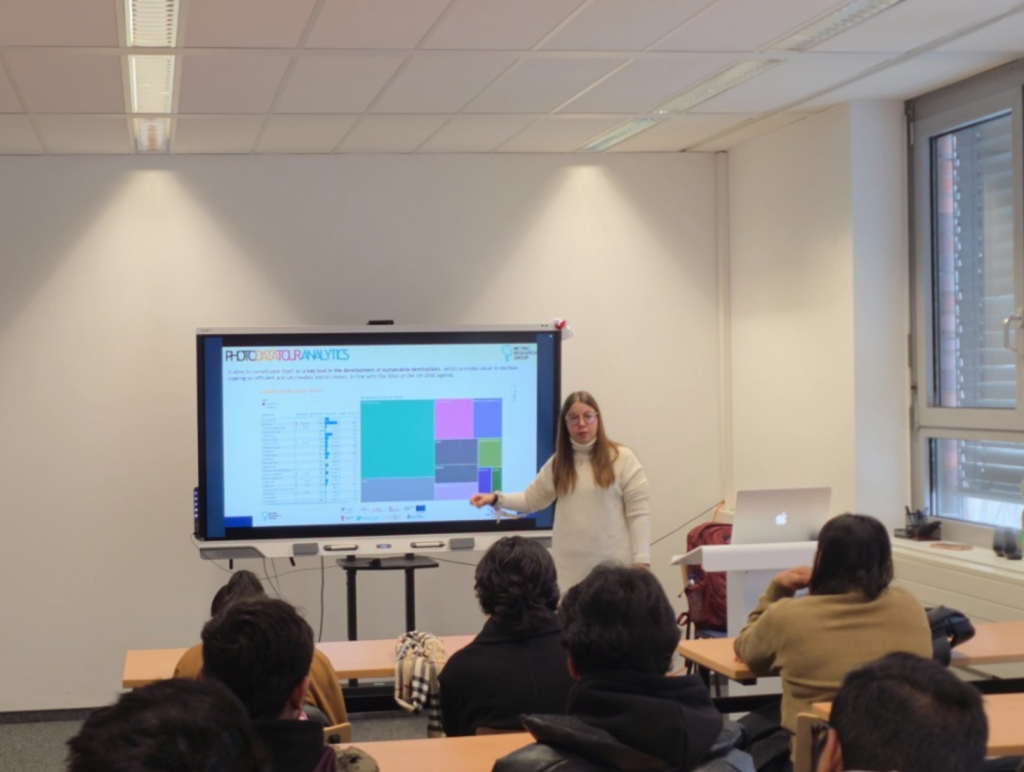
Lecture on Web Scraping & Sentiment Analysis for Tourism Data by Dr. Sofía Blanco Moreno (Assistant Professor, Consumer Behaviour & Marketing)
Dr. Sofía Blanco Moreno has presented the lecture on Web Scraping & Sentiment Analysis for Tourism Data. She delivered guest lectures to understand the people’s behaviour to post photos in social media. Her research area is AI-powered insights: analysing visual and textual content on social media for destination marketing management.
Introduction to Modern Tourism Data Analytics
Today, digital activity has a big impact on tourism. Dr. Sofía Blanco Moreno discussed during the guest lecture how information gathered from online platforms aids researchers in understanding how people travel, what they like, and how they react to various locations. Tourism experts now examine actual online interactions rather than just surveys or reports.
She emphasized that images, reviews, and social media posts provide insightful information about the preferences and behavior of visitors. Tourism organizations can better understand current trends and make decisions that represent actual visitor experiences by looking at this data.
Role of User-Generated Content in Tourism
User-generated content has become an important source of insight in modern tourism. During the lecture, Dr. Sofía Blanco Moreno explained how photos, reviews, and posts shared by travelers often reflect real experiences and emotions. Such content provides tourism companies with an enhanced ability to study tourist preference patterns.
PhotoDataTour Analytics: A Pioneering Research Platform
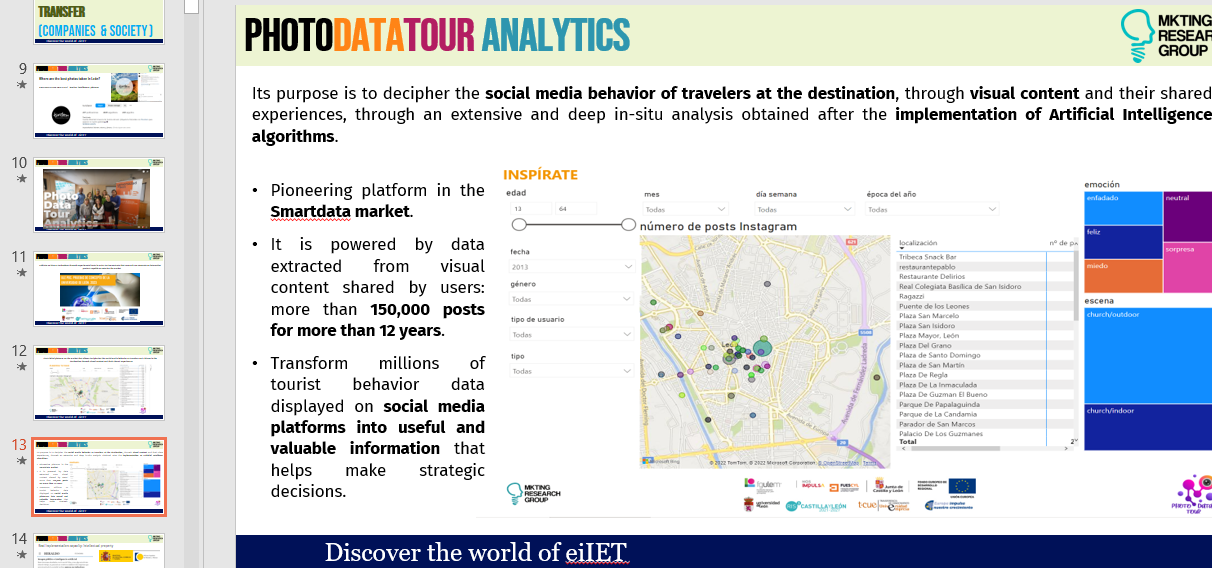
During the lecture, Dr. Sofía Blanco Moreno introduced the use of PhotoDataTour Analytics as a research tool used to analyze the behavior of tourists via geotagged pictures in a form of visual data posted on online social media. This tool assists in improving comprehension of how a destination is experienced by tourists through their photographic content.
This is enabled by merging picture data with location data, such that the solution provides useful data on destination trends and path trends.
Big Data and Artificial Intelligence in Tourism
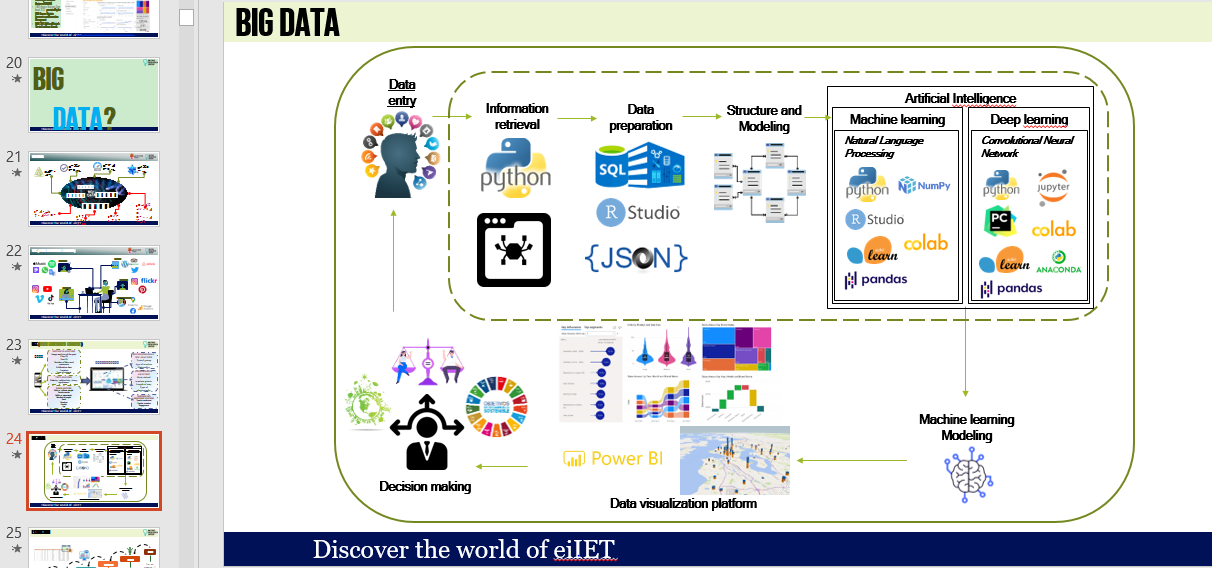
During the lecture, Dr. Sofía Blanco Moreno explained how big data and artificial intelligence support better decision-making in the tourism industry. Velocity, variety, and volume can be used for that matter.
More data may have more problems, so big data can be used to solve such issues.
Artificial Intelligence
Artificial Intelligence is the simulation of human intelligence and is used to make decisions, solve problems, and stay competitive in hotels, restaurants, and other tourism industries.
|
|
Social Media Platforms and Tourist Behaviour
Social media platforms offer valuable insight into how tourists share their experiences, express emotions, and influence the travel decisions of others. During the lecture, Dr. Sofía Blanco Moreno explained that each platform captures different types of content, which together help researchers understand travel behavior from multiple perspectives.
Key Social Media Platforms for Tourism Analysis
Together, these platforms generate large volumes of user-generated content that help researchers analyze emotions, preferences, and travel intentions at scale.
Demographic and Psychographic Influences
During the lecture, Dr. Sofía Blanco Moreno explained that tourist behaviour on social media is influenced by a combination of personal characteristics and travel interests. Factors such as age, location, and individual preferences shape how people capture, share, and engage with travel-related content online.
She also highlighted that understanding what travelers enjoy—such as food, culture, landscapes, or activities—helps tourism professionals identify patterns in visitor behaviour. These insights allow destinations to tailor experiences and communication strategies that better match the interests and expectations of different traveler groups.
Emotion Detection and Sentiment Analysis
During the lecture, Dr. Sofía Blanco Moreno explained how emotional responses can be observed through images shared on social media. Facial expressions, descriptions, or reactions given on a page actually helped determine how visitors felt about a destination. This actually facilitated understanding travel experiences, which could not simply be attained in a survey.
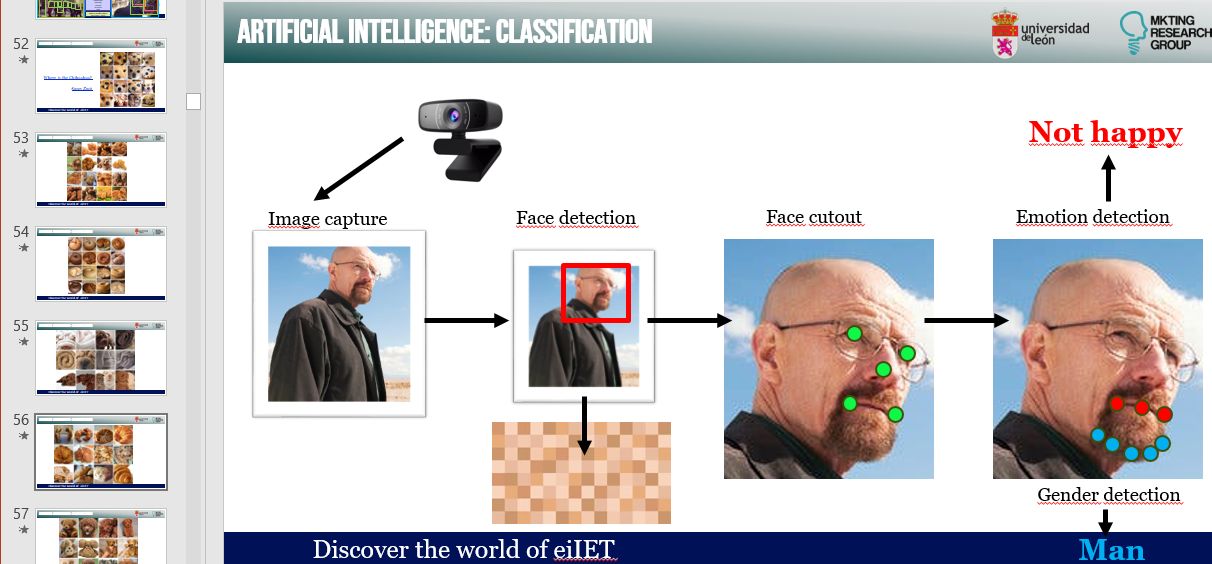
Slides presented during the guest lecture to illustrate big data and AI applications in tourism analytics.
Application in Market Research
|
Market research in tourism and hotel services focuses on understanding consumer behavior, market trends, and competition to support better business decisions and customer experiences. |
|
|
|
Web Scraping
During the lecture, Dr. Sofía Blanco Moreno introduced web scraping as a method for collecting publicly available online data relevant to tourism research. She explained how automated data collection helps researchers analyze large volumes of information efficiently, supporting the study of tourist behavior, online reviews, and social media activity.
Web Scraping Tools
Common Python tools for data extraction and parsing include BeautifulSoup and Scrapy. For dynamic websites, Selenium can be used. No-code tools such as Octoparse and ParseHub are also available.