User Manual
July 2, 2026
Global Business Environment: Navigating a Fragmented, Digital and Interconnected World
An India–Germany perspective on trade, talent, technology and inclusive growth
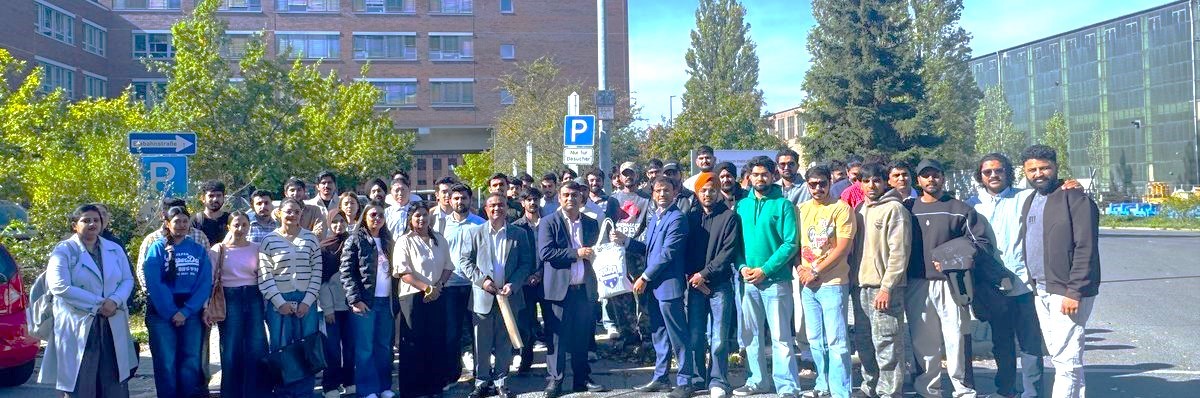
The European Institute of Innovation, Entrepreneurship, and Technology (EIIET) was honoured to welcome Dr. Vikas Kumar Sabata, Joint Director – International Relations at the Kalinga Institute of Industrial Technology (KIIT) and the Kalinga Institute of Social Sciences (KISS), Bhubaneswar, India, for a guest lecture on the global business environment and how leaders can navigate a world that is more connected, yet more fragmented, than ever before.
Using Berlin as a lens, the session connected geopolitics, trade, artificial intelligence, sustainability and talent mobility with a practical question for future managers: how can India and Germany work together, and what role do universities play in building those bridges?
Lecture Highlights
Key Topics Covered
A More Connected, and More Complicated, World
The lecture opened with a clear picture of today’s global business environment: the world is more connected than ever, but it now comes with more geopolitical, technological and regulatory friction. Students explored the forces that are reshaping how companies trade, invest and compete across borders.
A Simple Way to Read the Environment
To make sense of this complexity, the speaker returned to a familiar tool: the PESTLE framework. It remains useful because it forces leaders to look beyond the market itself and consider the wider forces that shape every business decision.
Globalisation Is Being Rewired
A central message of the lecture was that globalisation has not disappeared; its operating logic has changed. Efficiency still matters, but resilience, trusted partners and regulatory readiness now shape cross-border strategy.
Berlin Lens: India and Germany
Bringing the discussion closer to home, the lecture looked at India and Germany as two complementary economies. Germany brings industrial engineering, standards, applied research and green technology; India brings market scale, digital capability, entrepreneurship and a large talent base. Together they share opportunities in technology, sustainable industry, skilled mobility and higher education.
The EU–India Free Trade Agreement: A Changing Business Context
Students then examined the EU–India Free Trade Agreement and what it could mean for businesses on both sides. Beyond trade in goods, the agreement can deepen economic integration in services, technology, investment and knowledge-intensive collaboration, while making standards, sustainability and regulatory readiness more important than ever.
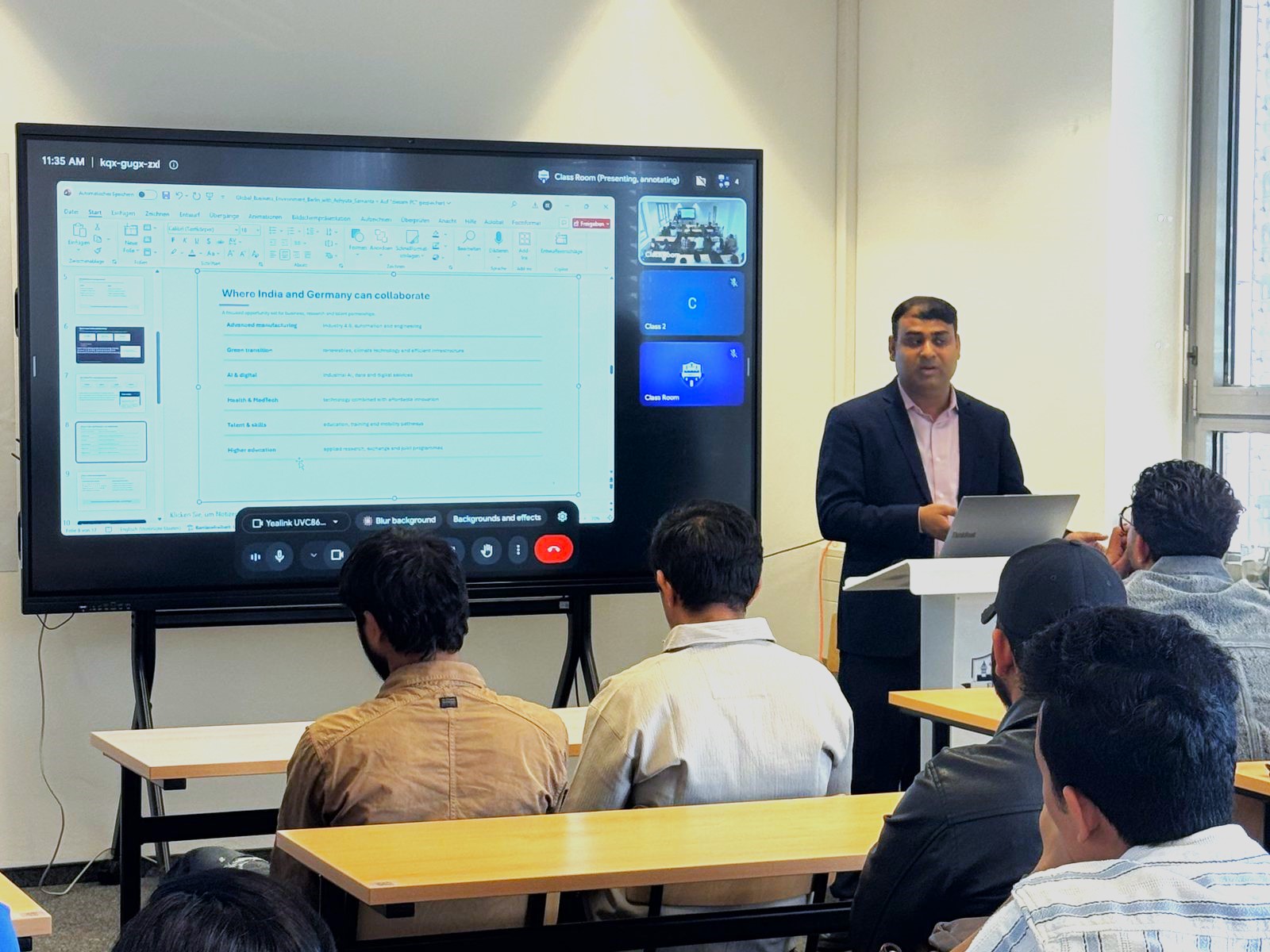
Where India and Germany Can Collaborate
The lecture identified a focused set of opportunities for business, research and talent partnerships between the two countries.
Cross-Cultural Management
Strong international partnerships depend on understanding how different business cultures approach communication, planning, time and relationships. The lecture compared typical tendencies in German and Indian business settings, with an important reminder about how such comparisons should be used.
Technology, AI and Sustainability
Competitive advantage, the lecture argued, increasingly depends on combining digital capability with responsible and sustainable operations, and on the people and governance that hold them together.
Universities in the Global Business Environment
The lecture also explored how the role of universities is changing. Beyond teaching, they increasingly act as platforms for talent, research, innovation and international partnership: supplying skilled graduates to industry, creating intellectual property, incubating start-ups, supporting international mobility, and contributing to regional development and social innovation.
KIIT: Internationalisation as Strategy
KIIT in India was presented as a practical example of building global reach through students, partnerships, mobility and institutional visibility. The lesson for business: internationalisation works best as an institution-wide strategy that links talent, partnerships, student experience, research and reputation.
Institution Building with Social Purpose
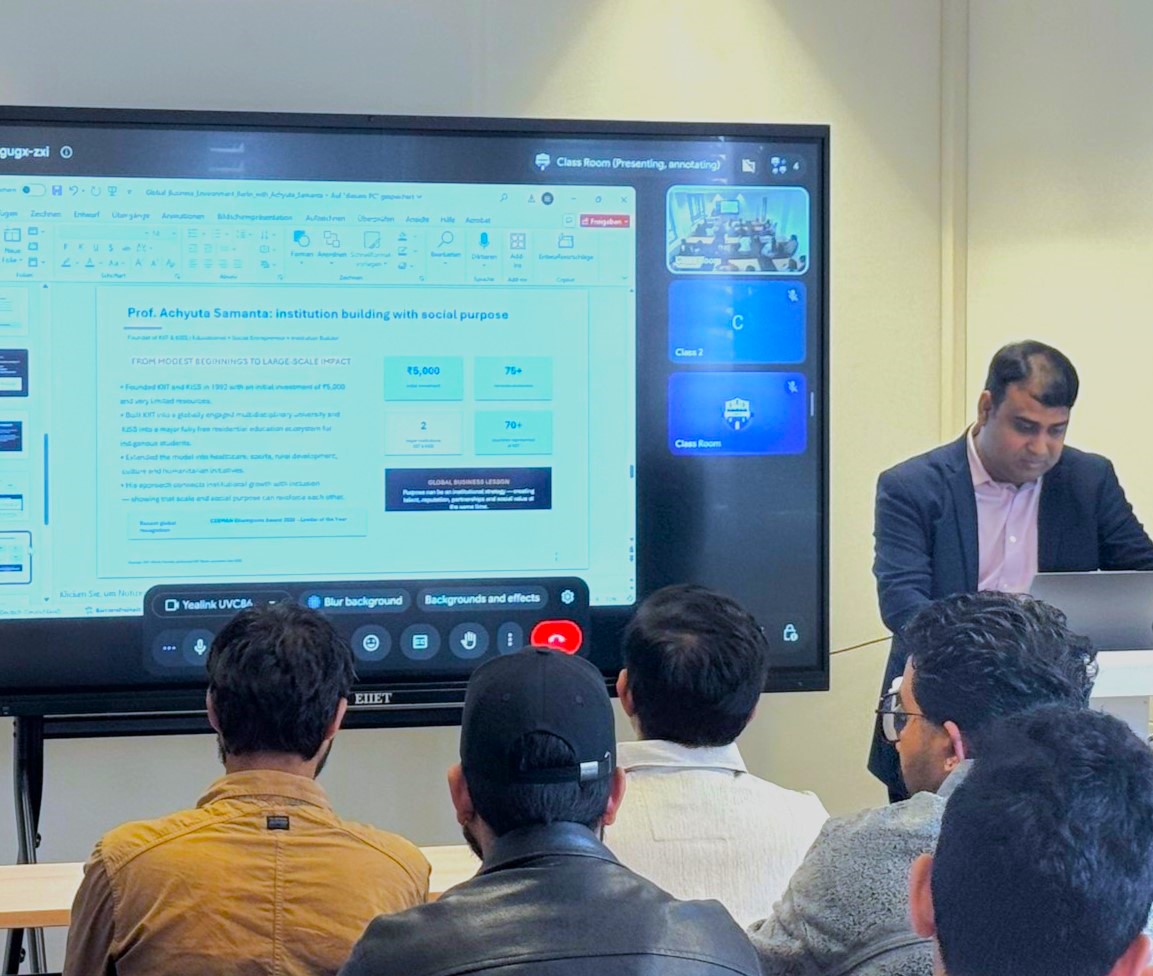
One of the most inspiring parts of the session told the story of Prof. Achyuta Samanta, founder of KIIT and KISS. Starting in 1992 with an initial investment of ₹5,000 and very limited resources, he built KIIT into a globally engaged multidisciplinary university and KISS into a large, fully free residential education ecosystem for indigenous students, later extending the model into healthcare, sport, rural development, culture and humanitarian work.
KISS: Inclusion as Infrastructure
KISS combines free residential education with nutrition, health, skills, sport and cultural dignity, building long-term human capability for indigenous communities. For students of business, it shows that inclusion can be designed as infrastructure, creating capability, resilience and long-term social value at institutional scale.
From Partnership Agreements to Real Activity
The lecture then turned to a practical point for anyone building international collaborations: signing a partnership agreement is the beginning, not the outcome. Partnerships create value when they lead to real activity and measurable results.
A Berlin Opportunity
To close, the lecture brought these ideas together in a practical India–Germany talent and innovation agenda, connecting education, talent, innovation and social impact.
The final message was simple: the next global advantage will be built through trusted ecosystems, bringing together India and Germany, education, innovation and inclusion.
Why This Matters for Students
This lecture gave EIIET students a current, international view of how global business works today, connecting economic data, policy developments and real institutional examples with the skills they will need as future managers and leaders.